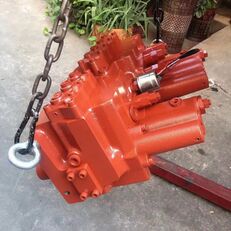
Distribuidor hidráulico para midi escavadora Hitachi EX215


Se decidir comprar equipamento a baixo preço, certifique-se de que contacta com o verdadeiro vendedor. Obtenha todas as informações possíveis sobre o proprietário do equipamento. Uma das formas de enganar potenciais clientes consiste em apresentarem-se como uma empresa real. Caso tenha suspeitas, informe-nos sobre as mesmas, para que possamos proceder a controlos adicionais, através do formulário destinado a transmitir comentários e opiniões.
Antes de efetuar uma compra, analise atentamente vários ofertas, para ter uma ideia do preço médio de venda do equipamento que escolheu. Se o preço da oferta que mais lhe agrada for muito inferior ao de outras ofertas idênticas, desconfie. Uma diferença de preço significativa pode indicar defeitos ocultos no equipamento ou uma tentativa de cometer atos fraudulentos por parte do vendedor.
Não compre produtos cujo preço se afaste marcadamente do preço médio de produtos similares.
Não efetue pagamentos por conta nem adquira produtos pré-pagos duvidosos. Em caso de dúvida, não receie pedir esclarecimentos e fotografias e documentação adicionais do equipamento, verificar a autenticidade de documentos e fazer perguntas.
É o tipo de fraude mais comum. Vendedores desonestos podem pedir um pagamento por conta ou sinal para assegurar a "reserva" do equipamento. Desta forma, os falsos vendedores podem conseguir um elevado montante e desaparecer, deixando de contactar os compradores e ficando incontactáveis.
- A realização do pagamento por conta com cartão
- Não efetue qualquer pagamento por conta sem documentos que confirmem a transferência do dinheiro, caso tenha dúvidas sobre o vendedor.
- A transferência do pagamento por conta para a conta do “administrador”
- Um pedido desta natureza deve alertá-lo, pois é muito provavelmente sinónimo de que está a negociar com um burlão.
- A transferência do pagamento por conta para a conta de uma empresa com o mesmo nome
- Seja cauteloso, os burlões podem utilizar nomes de empresas muito conhecidas, aos quais introduzem alterações quase impercetíveis. Se tiver a menor dúvida quanto ao nome da empresa, não efetue qualquer transferência.
- A substituição de dados na fatura de uma empresa real
- Antes de efetuar uma transferência, certifique-se de que os dados indicados estão corretos e que correspondem à empresa especificada.
Contactos do vendedor

 +86 189 289...
+86 189 2896 5241


 China

 China
 China


 China


 China


 China


 China


 China


 China


 China
Product Overview
Older excavators get judged in the workshop, not on the job. A machine with a sound engine, a straight undercarriage and no structural cracks is a candidate for another few years of work; one with worn hydraulics is often written off, because the cost of a full hydraulic overhaul looks larger than the machine's resale value. That judgement is frequently wrong. On an EX215, the pump and cylinders are usually still serviceable, and the part that decides the machine's fate is the distribution valve — the one assembly nobody checks because it cannot be inspected from outside.
This distribution valve divides pump flow among boom, arm, bucket, swing, travel and auxiliary on the EX215 platform. When spools and bores wear, output falls away quietly: the boom sags on a held bucket, the arm loses bite, swing lands short, travel bogs under load. This aftermarket assembly replaces the block complete with fresh internals set to working values, so the worn unit comes off and the replacement fits the original port positions.
Core Advantages
1. Changes the verdict on an older machine
Where the engine and structure are sound, a fresh block often returns the machine to useful work for a fraction of a full hydraulic overhaul.
2. Restores force at the cutting edge
Renewed spools put pressure back into the arm and bucket, so the machine digs rather than labouring.
3. Loads hold while grade is checked
Drift on a held bucket forces constant lever pressure. Fresh pairs keep the load steady.
4. Swing placement becomes predictable
Restored circuit isolation ends the overshoot habit that costs time on every placement.
5. Complete assembly avoids investing in a machine that still underperforms
Section‑by‑section repair can consume the budget while leaving the weakest circuit untouched. One tested block settles all of them.
Manufacturing & Quality Control
Spool and bore pairs are machined to print tolerance, matched by size, and hand‑run‑in until full‑stroke movement is free of binding. Assembled blocks are flow‑tested circuit by circuit with relief values logged against platform figures; out‑of‑window units are stripped and corrected. Blocks ship internally oil‑fogged, ports capped, and crated on foam.
Frequently Asked Questions
Q1: My machine has no part number listed — how do I order?
A: Send clear photos of the existing valve, its tag if present, and the machine serial plate. Section count, porting and mounting pattern identify the variant.
Q2: How do I decide whether the machine is worth a new block?
A: Check engine condition, undercarriage wear and structural cracks first. If those are sound and only hydraulics are weak, a block is usually the cheapest route back to work.
Q3: What symptoms indicate valve wear?
A: Boom drift on held loads, lost arm force at the bottom of a cut, inconsistent swing, and travel that reacts to bucket load.
Q4: Can my existing block be rebuilt?
A: If the casting is sound and has never been rebuilt, a kit may restore it. On a machine with several worn circuits, a complete assembly is usually the better value. Photos help us judge.
Q5: What hydraulic servicing accompanies installation?
A: Flush the system, renew filters, clean the suction strainer, refill with specified oil, and verify relief settings before returning to production.
Q6: What is excluded from warranty?
A: Material and assembly faults are covered. Damage from dirty oil, water ingress, a spool forced against a bind, or reliefs altered outside specification is not. Photograph the crate before opening if damage is visible.